How to Choose Materials for a South Florida Remodel
2026-05-04

Every material decision in a South Florida remodel has to answer two questions: does it look right, and will it survive this climate? Homeowners who skip the second question often end up redoing work within a few years that should have lasted decades.
Humidity Is the First Filter
South Florida's year-round humidity is the single biggest factor separating a remodel that ages well from one that doesn't. Solid hardwood flooring, for example, can expand, contract, and cup here in ways it simply won't in a drier climate, which is why engineered hardwood, with its plywood core, is almost always the better choice when a client wants a wood look. The same logic applies to cabinetry: MDF cores swell if they take on moisture, so we specify moisture-resistant substrates in kitchens and bathrooms even when the exterior finish looks identical to a standard option.
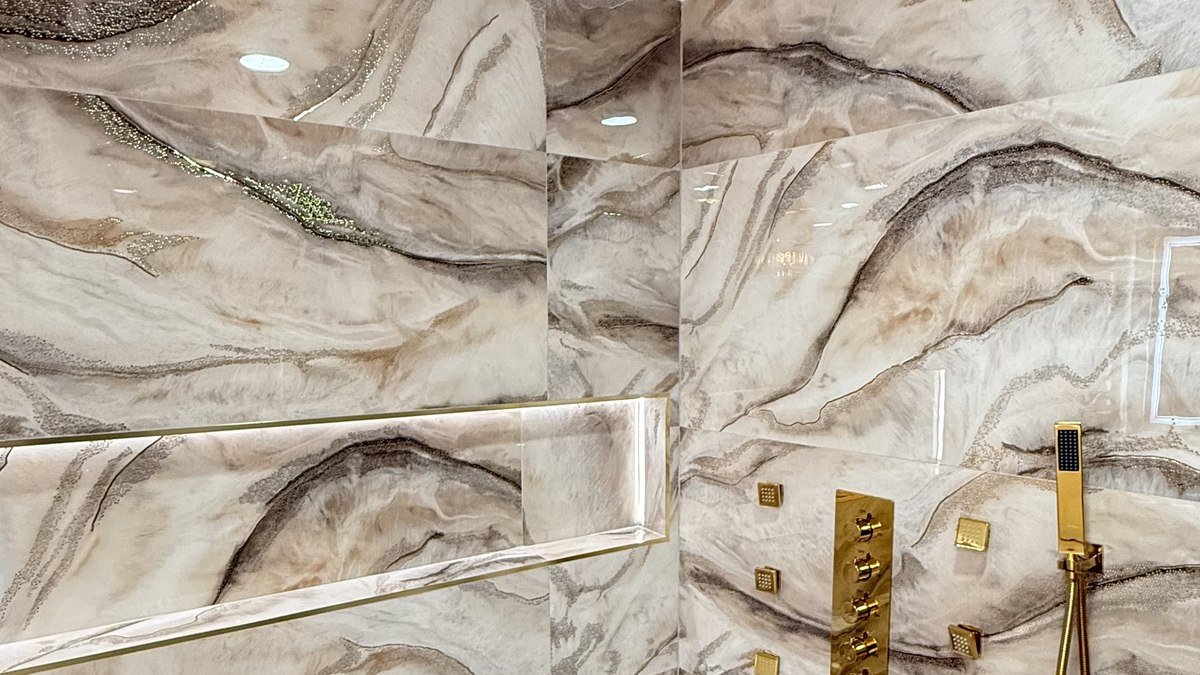
Grout and sealants matter more here too. A grout line that would hold up fine in a mild climate can develop mildew within a season in a humid South Florida bathroom if it isn't sealed properly, or if the wrong grout type was used in the first place — a detail that's invisible on install day and very visible eighteen months later.
Salt Air Changes What “Durable” Means
If a home is within a few miles of the coast, salt air becomes a real factor in hardware and metal finishes. Unlacquered brass, raw steel, and some powder-coated finishes will show pitting or corrosion faster near the water than a few miles inland. We generally recommend marine-grade stainless steel or finishes explicitly rated for coastal exposure on exterior hardware, railings, and any fixtures on a lanai or pool deck — a detail that adds a modest amount to the budget but avoids a hardware replacement project a few years down the line.
Sun Exposure Fades Things Faster Than You'd Expect
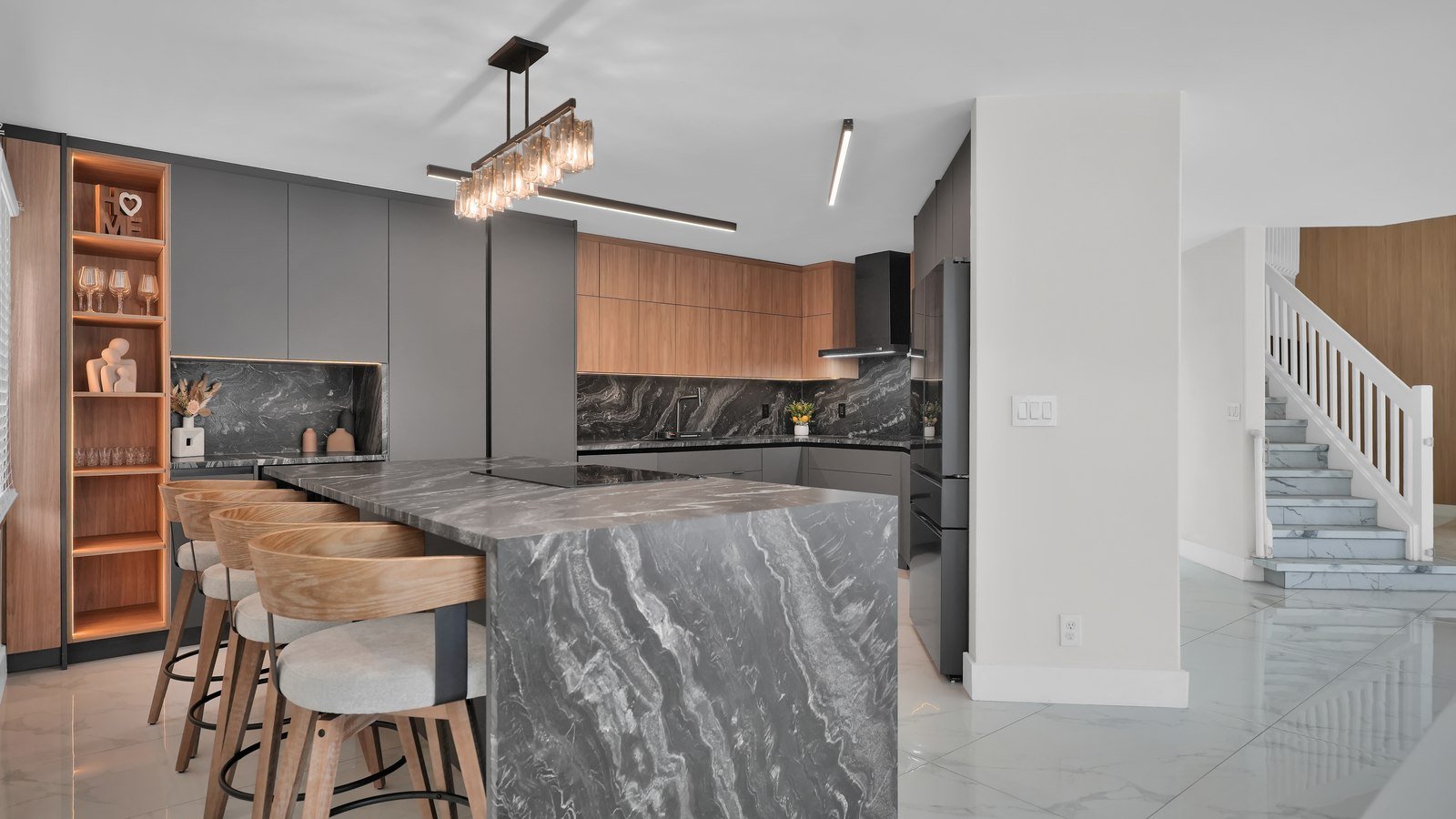
South Florida's sun is more intense and more constant than what most materials are designed to handle. Fabric upholstery, some wood stains, and certain countertop materials can visibly fade or discolor within a couple of years of consistent direct sun through large glass openings, which are increasingly common in the indoor-outdoor layouts homeowners want here. Quartz composite countertops, for instance, can discolor with prolonged UV exposure in ways natural stone typically won't, which is worth discussing with your designer before finalizing a kitchen island that sits right beneath a bank of west-facing windows.
Indoor-Outdoor Flooring Has to Do Double Duty
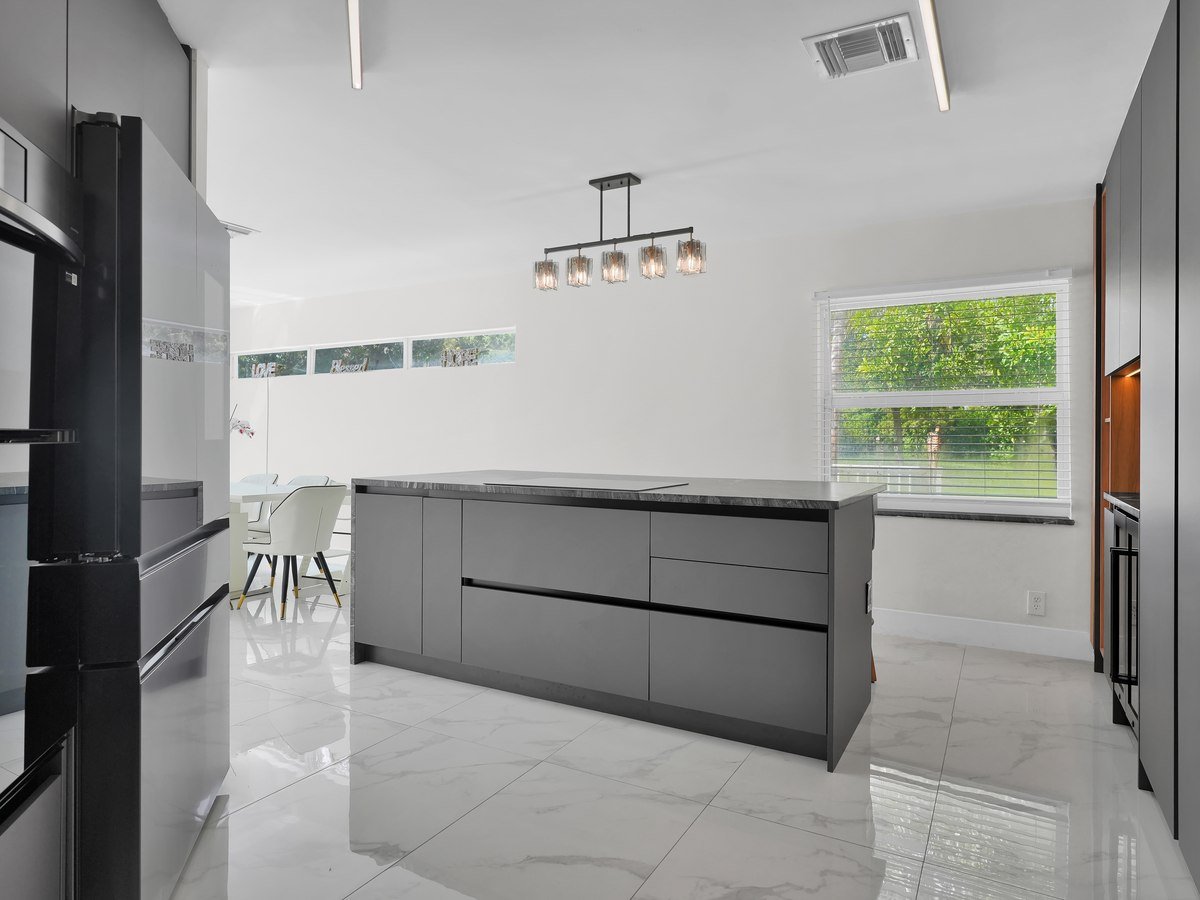
One of the most common requests we get is flooring that flows seamlessly from an interior living space out to a covered lanai. Porcelain tile is usually the right answer here: it's available in large-format planks that mimic wood or stone, it handles moisture and temperature swings without an issue, and slip-resistant outdoor-rated versions exist that match the indoor tile closely enough to read as one continuous surface.
Original Terrazzo Deserves a Second Look
If your home was built between the 1950s and 1970s, there's a reasonable chance there's original terrazzo somewhere under existing flooring. Terrazzo was built for exactly this climate — it doesn't warp, doesn't mind humidity, and often just needs grinding and polishing to look new again. We always recommend having it assessed before defaulting to full replacement; restoring what's already there is often both a better result and a better use of the renovation budget.
Work With Someone Who Specifies for the Climate, Not Just the Catalog
The right material choice in South Florida usually isn't the trendiest option in a showroom — it's the one that's been selected with this specific climate in mind. A design-build team that handles installation as well as design has a direct incentive to get this right, since they're the ones who'll hear about it if a material fails early. If you're planning a remodel, it's worth asking any contractor directly how they account for humidity, salt exposure, and UV when they're specifying materials, not just when they're picking finishes for a rendering.